- Start from the current PDF, web page, ebook, transcript, or note, then choose what belongs in this task.
- Once the scope is clear, ask Pemo for summaries, structured points, review questions, or outlines.
- For long material, use AI to understand structure first, then return to the source, transcript, or notes for manual review.
- Pemo Q&A does not promise a complete automatic citation chain, so important claims still need source verification.
1. Choose the material before asking
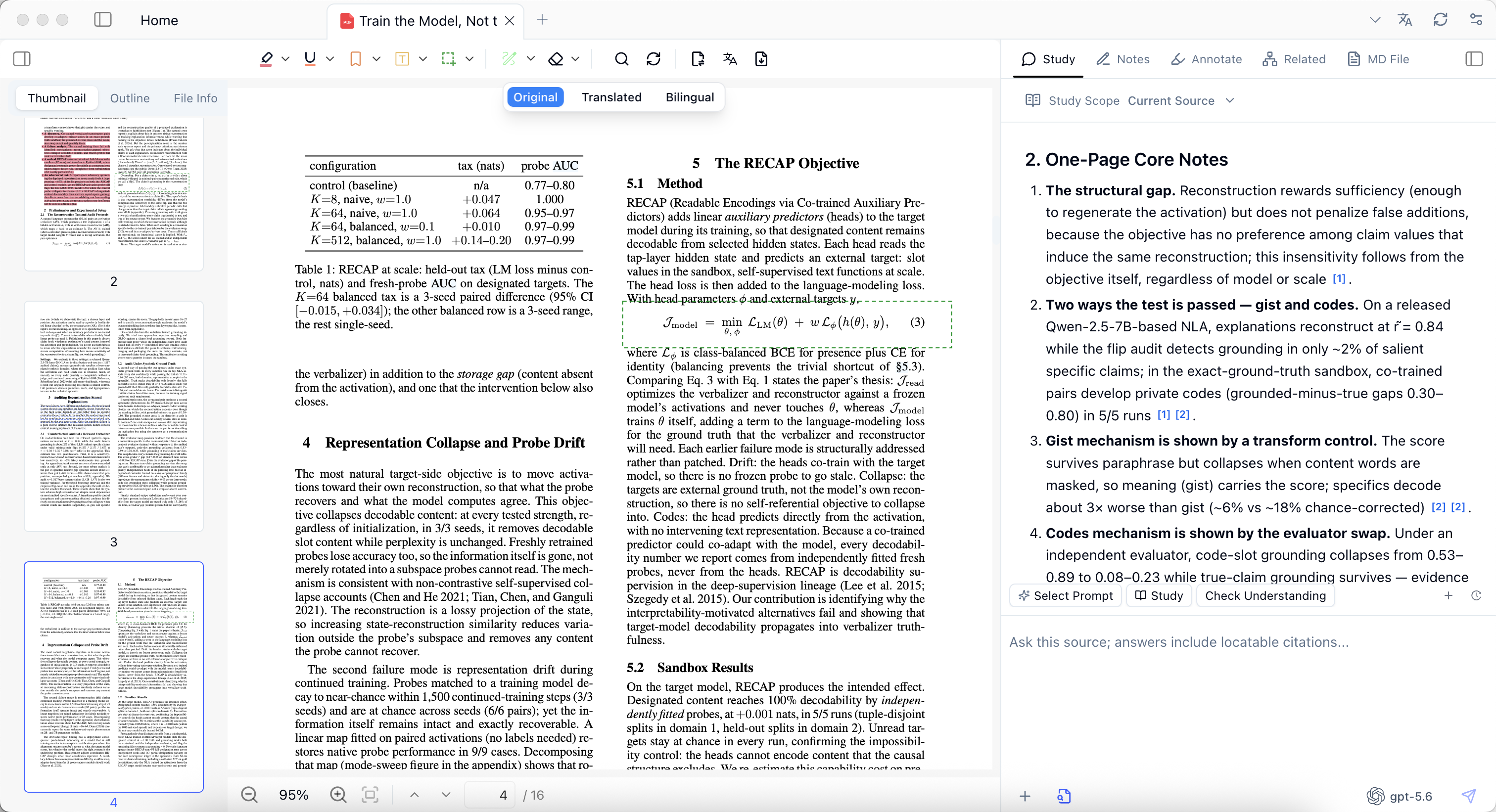
Pemo's Q&A entry is not a separate chat box. It sits beside the current source. Before asking, decide whether this task should use the current PDF, web page, ebook, transcript, note, or a small set of related sources.
The clearer the source scope, the easier the result is to review. For course packs, interviews, research materials, or meeting records, state what the answer should be based on before asking. Add related sources only when they belong to the same task.
2. Ask, summarize, and structure the source
Once the scope is clear, use Pemo to create summaries, key points, question lists, review outlines, discussion prompts, or structured notes. For long documents and transcripts, start with structure before chasing details.
Common workflows:
- Long documents: generate structure, section relationships, and review questions.
- Course material: create review outlines, concept explanations, and self-check questions.
- Interviews: extract themes, quotes, needs, and follow-up questions.
- Meetings: organize topics, decisions, action items, and risks.
3. Review important claims against the source
Pemo Q&A does not promise a complete automatic citation chain. It helps organize selected material, but formal citations, public content, legal judgment, research claims, client reports, and key numbers should still be checked against the source, transcript, or notes.
Suggested prompt
Answer only from the current source. First create a structured summary, then list claims, numbers, terms, and source-location clues that require manual review. If the source does not support something, write "not stated in the current source."